
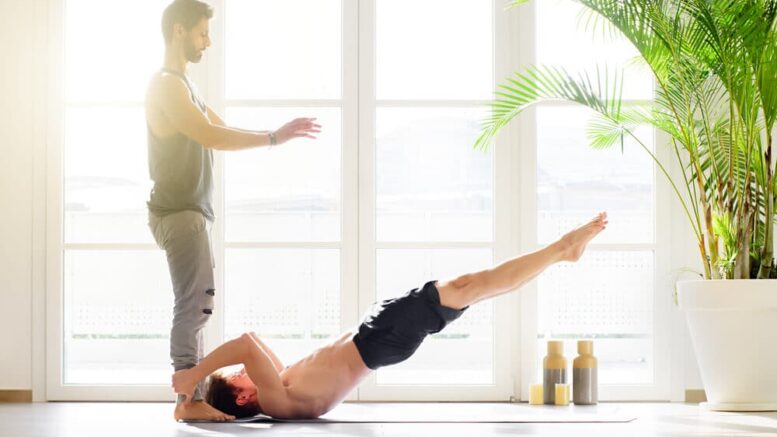
Few core exercises command as much respect as the Dragon Flag. Visually striking and physically demanding, this movement requires the body to function as a rigid, singular unit. The true effectiveness of this exercise lies in its ability to challenge the core’s primary function: resisting unwanted movement while the limbs are in motion. Often associated with martial arts legend Bruce Lee, who used it to develop unparalleled trunk stability and explosive power, the Dragon Flag remains a gold standard for those seeking elite-level core strength.
By mastering this movement, you transform your midsection into a bridge for force transmission. Rather than just training for aesthetics, the Dragon Flag builds “show-and-go” strength that translates directly to athletic performance and heavy compound lifting.
Understanding the Mechanics of the Dragon Flag
The Dragon Flag is categorized as an anti-extension core exercise. In this movement, your upper back and shoulders serve as the primary base of support while the rest of your body remains suspended and straight. By gripping a stable anchor behind your head—such as a weight bench or a vertical post—you leverage your body weight against gravity.
The difficulty of the Dragon Flag stems from its long lever arm. As your legs descend away from your shoulders, the mechanical disadvantage increases, forcing your abdominal muscles to work significantly harder to prevent your spine from arching and your hips from sagging. This constant battle against gravity makes it far more effective than traditional floor-based abdominal work.
Step-by-Step Instructions for Flawless Execution
Performing a Dragon Flag requires precision. Since the objective is to move as a solid pillar, even minor deviations in form can reduce its effectiveness or lead to strain. Follow these steps for a perfect rep:
- Lie face-up on a bench or floor, reaching back to firmly grasp a sturdy object. Ensure your grip is secure, as this is your anchor point.
- Engage your core and drive your legs toward the ceiling. Your goal is to create a straight line from your ankles down to your shoulders, with your weight resting on your upper traps.
- Tuck your ribs toward your pelvis to eliminate any arch in your lower back, and squeeze your legs together tightly.
- Lower your entire body in a slow, controlled arc. Continue the descent only as long as you can maintain a neutral spine and full-body tension.
- Once you reach your lowest controlled point, reverse the movement to return to the vertical start. Reset your breath and repeat.
Signs of Proper Technique
- Your body maintains a consistent, straight line from the shoulders to the toes.
- The hips remain fully extended without bending or “piking.”
- The tempo is deliberate and controlled, rather than relying on momentum.
- You feel a massive amount of tension throughout the entire anterior chain to prevent “folding.”
- The abdominal wall stays flat, keeping the ribs from flaring upward.
- The glutes are fully engaged to support the hips.
Key Visual Markers for Success
- The legs and torso move in perfect synchronization during both the ascent and descent.
- The neck remains neutral and relaxed while the upper back stays firmly planted against the surface.
Comprehensive Muscle Recruitment Patterns
To maximize the benefits of the Dragon Flag, it is helpful to understand which muscles are doing the heavy lifting. Focusing on these areas will help establish the necessary mind-muscle connection for high-level performance.
Rectus Abdominis
Role: Preventing spinal extension.
This muscle works isometrically to ensure the lower back does not arch as the weight of the legs pulls the body toward the floor.
Transverse Abdominis
Role: Stabilizing the spine through internal pressure.
The “deep core” acts as a natural weight belt, creating intra-abdominal pressure that keeps the trunk rigid throughout the range of motion.
Internal and External Obliques
Role: Rotational and lateral stability.
While the movement is linear, the obliques fire to prevent any twisting or shifting, ensuring the body stays on a perfectly straight path.
Latissimus Dorsi
Role: Anchoring the upper body.
By pulling against the bench or anchor, your lats engage to stabilize the shoulders and connect the upper body tension to the core.
Gluteus Maximus
Role: Maintaining hip extension.
Strong glute contraction is vital to prevent the hips from “breaking” or bending, which would shorten the lever and make the exercise easier.
Hip Flexors
Role: Leg control and concentric assistance.
These muscles help manage the weight of the legs, but they should act as supporters to the abdominals rather than the primary movers.
Common Technical Errors and Corrective Strategies
Because the Dragon Flag is an advanced movement, it is easy for form to break down as you fatigue. Recognizing these errors early will help prevent injury and ensure progress.
Loss of Midsection Rigidity
When the core tires, the ribs often flare out and the lower back arches excessively. This shifts the load from the muscles to the lumbar spine.
The Fix: Re-establish your brace before every repetition. Focus on “knitting” your ribs down toward your hip bones to maintain a flat, strong torso.
Bending at the Hips
Many people subconsciously bend their hips to make the exercise easier. This shortens the lever arm and turns the movement into a standard leg raise.
The Fix: Aim for a “plank in the air.” If you cannot maintain a straight line, practice “tucked” versions (with knees bent) until your strength improves.
Lack of Eccentric Control
Dropping the legs too quickly eliminates the most beneficial part of the exercise and creates jarring forces on the lower back.
The Fix: Use a three-to-five-second count on the way down. If you cannot control the descent, stop the set or reduce the range of motion.
Strain in the Cervical Spine
Pressure should never be felt in the neck. If it is, you are likely rolling too far back onto your head.
The Fix: Intentionally press your shoulder blades and upper traps into the bench. Keep your gaze upward and your neck soft to ensure the support comes from the large muscles of the back.
Performance Benefits for Athletes and Strength Training
The Dragon Flag offers unique advantages that few other core exercises can replicate, making it a favorite for those seeking functional dominance.
- Superior Anti-Extension Strength: It trains the abdominals to resist the heavy forces that try to pull the spine into an arch, which is crucial for protecting the back during heavy squats and deadlifts.
- Enhanced Coordination: It teaches the body to move as a synchronized unit, improving the “kinetic chain” connection between the upper and lower body.
- Path to Advanced Skills: This movement serves as a prerequisite for elite bodyweight feats like the human flag, front lever, and advanced gymnastics maneuvers.
- Immediate Performance Feedback: The Dragon Flag acts as a diagnostic tool. If you have a weak link in your lats, core, or glutes, the movement will immediately reveal it through a break in form.
Programming Guidance
You can integrate the Dragon Flag into your routine in two primary ways: either at the end of a session to finish your core or during your warm-up when you are fresh to prime your nervous system for heavy lifting.
Beginner: Perform 2–3 sets of 3–5 repetitions focusing only on the “negative” (lowering phase) to build foundational tension.
Intermediate: Perform 3 sets of 4–6 repetitions with a controlled range of motion, ensuring perfect alignment at all times.
Advanced: Perform 3–4 sets of 3–5 full repetitions with a slow tempo and a brief pause at the bottom of each rep.
Allow 60–90 seconds of rest between sets to ensure your core can maintain the necessary intensity.
Final Thoughts on Mastering the Dragon Flag
The Dragon Flag remains one of the most effective benchmarks for true core strength. By requiring the body to remain rigid while navigating a large range of motion, it builds the kind of stability that translates into every other area of fitness. To see the best results, treat each rep as a skill to be practiced rather than a movement to be rushed. Focus on the quality of the tension and the integrity of your alignment, and you will unlock a level of midsection strength that few other exercises can provide.
Be the first to comment on "Beyond the Abs: Why Bruce Lee’s Iconic Dragon Flag Still Reigns as the Ultimate Core Destroyer"