
For all the money poured into healthcare technology over the past decade, one of the most damaging conditions of modern life still has no app, no algorithm and no real owner. It is loneliness. Not the passing kind, but the chronic, grinding isolation that shortens lives, hollows out recovery and sits quietly underneath a long list of conditions we prefer to treat one symptom at a time.
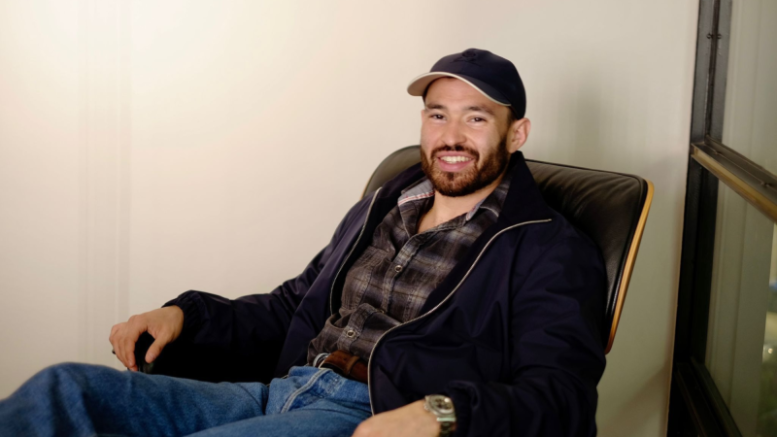
Freddy del Barrio thinks that is the wrong way round. As co-founder of Companion AI, he has built his work on a deceptively simple argument: that healthcare keeps trying to solve the measurable problem while ignoring the human one. We can monitor a heart rate from across the country. We cannot, for the most part, notice when someone has not spoken to another person in four days.
“Most healthcare technology is designed for the moment of crisis,” is the thread that runs through everything del Barrio says about the sector. The appointment. The diagnosis. The intervention. What it rarely accounts for is the long, uneventful stretch in between, where wellbeing is actually won or lost. That stretch is where isolation does its damage, and it is precisely the part of care that nobody has been paid to look after.
The people technology tends to forget
Companion AI did not start with the easy market. It started with the two groups that connection technology usually leaves behind: older adults in assisted living, and isolated military veterans.
These are not the demographics that flatter a pitch deck. They are harder to reach, harder to design for, and far removed from the young, fluent, always-online user that most consumer technology quietly assumes. Which is rather the point. Del Barrio’s interest is in the edges of the system, the places where loneliness is not an inconvenience but a genuine health risk, and where the cost of being forgotten is measured in decline.
The veterans piece is the one that gives the work its emotional weight. Here are people who once belonged to something total, a unit, a mission, a shared sense of purpose, and who can find themselves, years later, profoundly alone with very little built to catch them. A companion technology that understands the shape of that life, and remembers it across time, is a different proposition to a chatbot that resets every morning.
Memory as the missing ingredient
The word del Barrio keeps returning to is longitudinal. It sounds clinical, but the idea behind it is warm. Care, done properly, is continuous. It accumulates. A good carer, a good friend, a good doctor remembers. They know what mattered last month, what you were worried about, who you were waiting to hear from.
Most AI does none of this. It is brilliant in the moment and amnesiac the second the conversation ends. Companion AI’s central bet is that memory is not a feature to bolt on later, but the entire substance of the thing. A companion that forgets you is not a companion. It is a vending machine for sentences.
Building that is slow, expensive and unglamorous, which leads neatly to one of del Barrio’s more revealing convictions.
Build, do not buy
In a sector addicted to acquisition, where the reflex is to buy the capability and ship it on Monday, del Barrio has held to building Companion AI’s infrastructure himself, alongside co-founder Sam Hootni. It is the harder road and he knows it.
His reasoning is not stubbornness. It is that the thing being built here, an emotional infrastructure for people at their most vulnerable, cannot be assembled from off-the-shelf parts and good intentions. The values have to be engineered in from the foundation, not negotiated in after the fact. You do not outsource trust. You earn it in the architecture.
That is an unfashionable thing to say in a market that rewards speed above almost everything. It is also, for a wellness audience, the more reassuring answer. The companies you want anywhere near isolated and elderly people are the ones treating the work as a responsibility rather than a land grab.
A different definition of innovation
There is a gap, del Barrio argues, between AI innovation and AI that actually helps. The industry has become extraordinarily good at building things that are impressive and oddly bad at building things that are needed. The dazzling demo and the lonely 84-year-old in a care home are, somehow, products of the same boom, and only one of them is being served.
His critique lands because it is not anti-technology. It is anti-misdirection. The same tools that can write code and pass exams could, pointed differently, sit with someone through the long Tuesday afternoons that no clinical pathway accounts for. The question is not whether the technology is capable. It is whether anyone with the resources to build it can be bothered to aim it at the people who need it most.
That, in the end, is the case Companion AI is making. Not that AI will replace human care, which would be both impossible and grim, but that it can hold the line in the enormous gaps human care cannot reach. The night. The distance. The dispersed family three time zones away. The veteran with no unit left to call.
We engineered a great deal of this isolation, after all. We built the dispersed, digital, always-moving world that left so many people quietly stranded inside it. There is a certain justice in the argument that the same ingenuity ought to be turned towards reconnecting them.
Whether the sector listens is another matter. But del Barrio is, at the very least, asking the question the rest of healthcare technology has spent a decade talking around. Not how do we treat people faster, but how do we stop leaving them alone.
Be the first to comment on "The Quiet Epidemic: Why Freddy del Barrio Believes Connection Is the Care We Forgot to Build"