
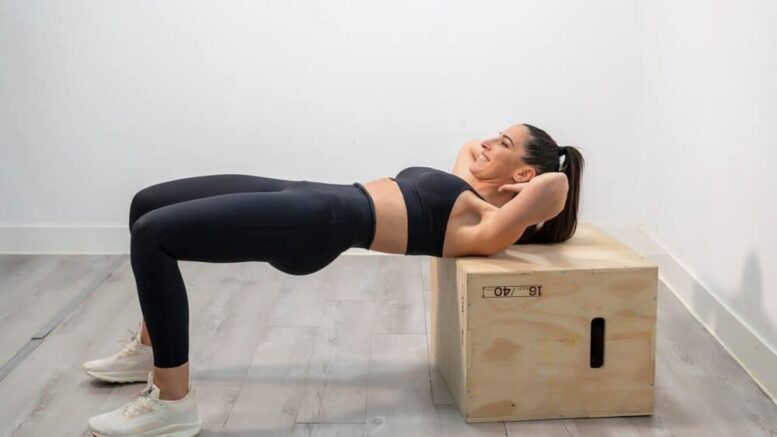
While the hip thrust is widely considered a premier exercise for glute development, many lifters fail to achieve the desired results because they do not properly isolate the target muscles. Instead of the glutes bearing the brunt of the load, other muscle groups often compensate, leading to a loss of efficiency. According to strength experts, the issue isn’t necessarily a lack of strength, but rather a “leakage” of force throughout the body. When the body isn’t properly braced—often because there is no barbell resting on the back to provide a natural anchor—joints remain unstabilized, allowing the hamstrings and lower back to take over the movement.
The primary goal of the hip thrust is to engage the gluteus maximus, the body’s strongest hip extensor. While the inner thighs (adductor magnus) and hamstrings naturally assist, poor form often shifts the focus away from the glutes entirely. To fix this, experts suggest utilizing “opposing pressure” to force the glutes into mandatory engagement. One effective way to achieve this is through a unilateral variation known as the hand-to-knee hip thrust.
Mastering Technique for the Hand-to-Knee Hip Thrust
The hand-to-knee hip thrust is not designed to be an easier alternative to the traditional lift; rather, it is a tool to increase intensity and ensure the glutes are doing the work. This single-leg variation requires significant stability and focus. Follow these steps to execute the movement with precision:
- Begin by sitting on the floor with your upper back supported by a bench, softbox, or stable elevated surface.
- Plant one foot firmly on the ground to serve as your base, then lift your hips so your torso is parallel to the floor.
- Lift the opposite leg, bending it at a 90-degree angle. Place both hands firmly against the top of this knee.
- Keep your chin tucked toward your chest to maintain a neutral spine. Simultaneously push your knee into your hands while your hands push back against the knee.
- Maintain this isometric tension as you lower your hips about halfway toward the ground.
- Squeeze the glute of the planted leg and drive back up to the starting position, avoiding the use of momentum.
Understanding the Benefits of Increased Glute Tension
The key to this exercise lies in the tension created by the opposing forces of the hands and knee. This specific pressure “locks” the joints in the kinetic chain, leaving the glute as the only muscle capable of driving the movement. By eliminating the ability to swing the leg or arch the lower back, the exercise forces the gluteus maximus to stay under constant tension. This is often signaled by a noticeable “shake” at the top of the repetition, which indicates that the muscle is being fully recruited.
One of the greatest advantages of this variation is that it requires no equipment other than a bench or box. It serves as an excellent diagnostic tool; if you have previously performed hip thrusts without feeling a “burn” or soreness in the glutes, it is likely because your joints were not properly stabilized. By making glute engagement mandatory through the single-leg setup and hand-to-knee pressure, you can ensure every repetition counts toward muscle growth.
Before adding heavy weights to your routine, the standard should be to master bodyweight repetitions until they become challenging. Once you have established a mind-muscle connection and can maintain perfect tension throughout the set, you can then progress to weighted variations to further enhance strength and hypertrophy.
Final Takeaway for Better Glute Training
Improving your glute strength is less about the amount of weight on the bar and more about how effectively you can direct force into the muscle. By incorporating the hand-to-knee hip thrust into your routine, you can eliminate compensatory movements from the lower back and hip flexors. Focus on the isometric tension between your hands and knee to lock your form, and prioritize slow, controlled movements over momentum to maximize your gains.
Be the first to comment on "The Savage Hip Thrust Hack That Forces Your Glutes Into Hyper-Growth"